What is AI actually good at in business?
"We should be using AI."
We hear some version of that a lot, and with AI showing up in nearly every piece of software we use, it’s an understandable feeling. The harder question is what you should actually use it for. The answer probably isn’t “everything.” AI is especially good at certain kinds of work, and finding the right opportunities starts by looking at what your people are already doing today.
Identify the work that takes time, but not always judgement.
Think about the parts of the workday that involve finding, reading, sorting, summarizing, or moving information around. Maybe someone regularly searches through hundreds of documents to answer questions from employees or customers. Maybe your team manually reviews incoming requests and routes them to the right person. Maybe someone pulls information from several places every Friday to create the same report.
These are the kinds of problems where AI can get interesting. It can be useful for:
- Finding relevant information across large collections of documents
- Summarizing reports, research, customer feedback, or meeting notes
- Extracting and organizing information from documents
- Categorizing incoming requests and helping route them appropriately
- Drafting or transforming content for different audiences
- Recognizing patterns across large amounts of information
- Helping employees find answers buried in organizational knowledge
You can do many of these things with tools like ChatGPT or Copilot. But the potential benefit increases when AI becomes part of the software your organization actually uses.
The AI might be the smallest part of the solution.
Imagine an employee needs an answer about a company policy. A general AI tool might be able to answer the question if you give it the right documents. But a custom solution could know which documents are approved, understand which information that employee is permitted to see, search the appropriate sources, provide an answer with citations, and give the employee a way to open the original material. The AI is doing something it’s good at: finding and interpreting information. But there’s a lot happening around the AI to make that capability genuinely useful.
The same is true for a company receiving hundreds of requests through a website. AI could help interpret each submission, extract important information, suggest a category, and determine where it should go next. Your software could then move that information into the appropriate system and flag unusual or uncertain requests for a person to review. That’s when AI stops being an interesting tool someone on your team uses and starts becoming part of a business process.
Good AI still needs good software.
It’s easy to focus on what the AI model can do and overlook everything around it. A useful business AI solution may still need all the things good software has always needed: thoughtful user experience, reliable data, integrations with other systems, appropriate permissions, security, accessibility, testing, and a clear plan for what happens when something doesn’t work as expected.
It also needs people. AI can generate an answer, identify a pattern, summarize a thousand pages, or recommend a next step very quickly. It doesn’t automatically know whether that answer makes sense for your organization or whether the recommendation is a good business decision. The people who understand the work provide the context, experience, and judgment that AI doesn’t have.
We think AI is often most useful when it helps people do their work, rather than trying to decide what work matters. That distinction is important because the goal shouldn’t be to remove people from every process. The goal should be to identify the parts of a process where technology can remove friction and give people more time for the work that actually benefits from their expertise.
Start with your business—not with AI.
If you’re trying to figure out where AI might fit in your organization, don’t start by making a list of everything AI can do. Look at how your organization works today.
Where are people spending hours searching for information? Where are they repeatedly reading and categorizing similar things? Where does information have to be copied, summarized, or reformatted before someone can use it? Where does valuable organizational knowledge exist but remain difficult to find? Those questions can uncover much better opportunities than simply asking, “Where can we use AI?”
They can also uncover something else: AI may not be the answer. Sometimes a traditional software feature, integration, automation, or even a change to the process itself will solve the problem more reliably. If the goal is to make someone’s work easier, the technology matters less than whether the problem actually gets solved.
Turning AI capability into a useful business tool.
This is where custom software and AI start to overlap.
An AI model might provide the ability to understand a document, answer a question, recognize a pattern, or generate something new. Custom software can put that capability into the context of your business. It can connect the AI to the right information, incorporate it into an existing workflow, give different people appropriate access, communicate with other systems, and provide an interface designed for the people who will actually use it.
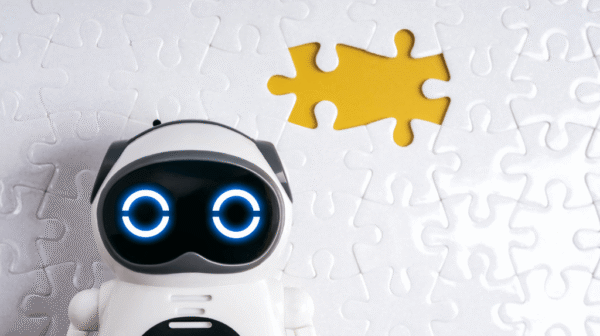
In other words, AI may be one piece of the solution rather than the solution itself.
That’s an important distinction for us at Pixo. We build custom software, so we’re not approaching these conversations with the assumption that every organization needs a standalone AI tool. We’re interested in how AI can become another useful capability within the technology that helps your organization work.
Curious where AI could help?
You don’t need to come to us with an AI strategy or a fully formed idea for an AI application. In fact, we’d rather start with the problem.
Tell us what’s taking too long, what your team finds frustrating, where information gets stuck, or what you wish your current software could do. We can help you explore what’s possible, where AI might fit, and whether a custom AI solution makes sense.
Sometimes the most useful first question isn’t “What can AI do?” It’s “What could we make easier?”
Level-up your business with AI.
Have a process you think AI could improve? Or just curious about what’s possible? Talk with Pixo about your business, your existing technology, and where your team is getting stuck. We’ll help you explore whether AI is the right tool and what a practical solution could look like.
Ready to work smarter?